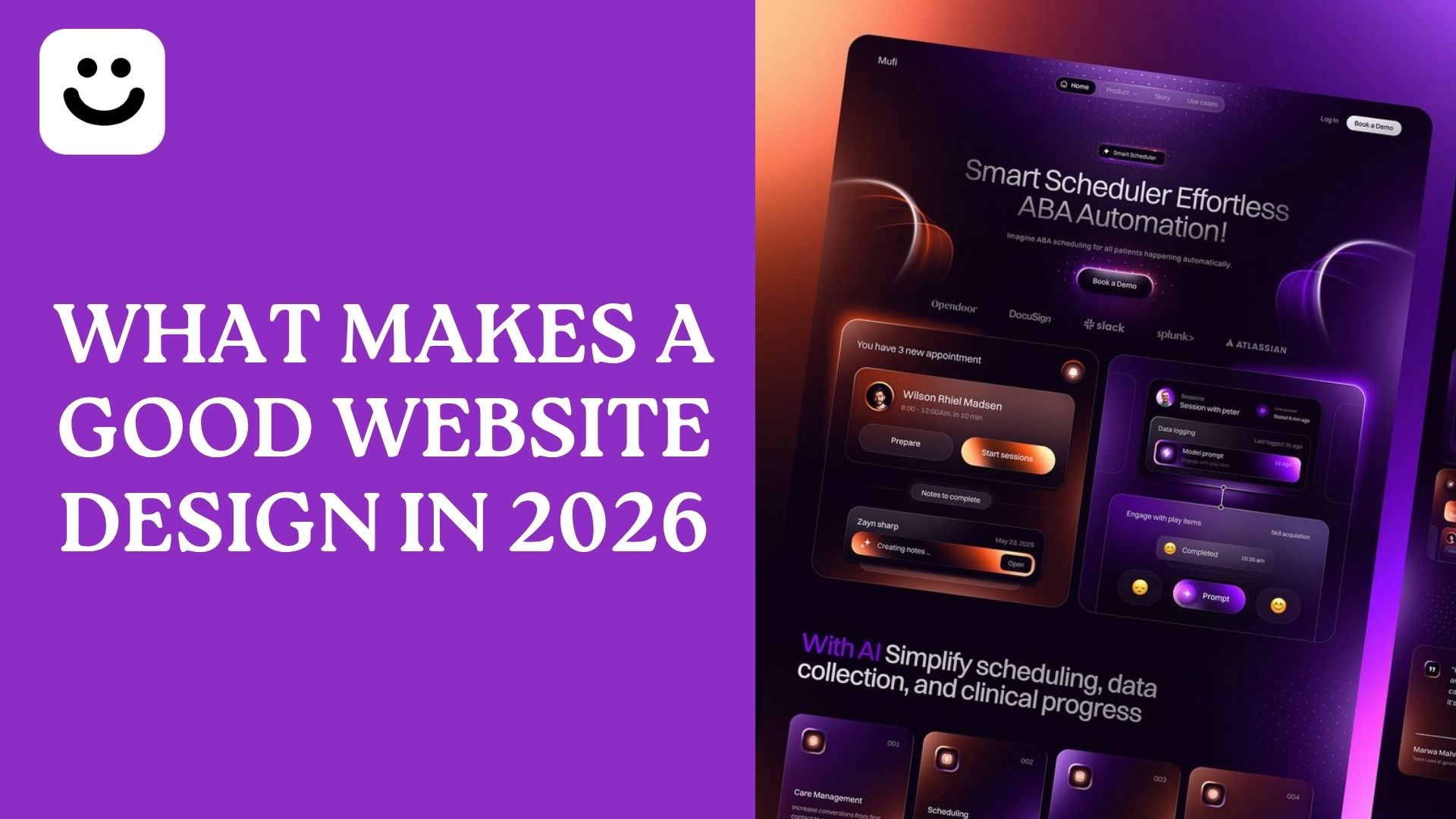
In 2026, a good website is no longer just about visual appeal, it's about performance, clarity, and connection. Users today are faster, more selective, and less patient than ever. Within seconds, they decide whether to stay or leave. That means your website has one job: deliver value instantly and effortlessly.
So, what separates a high-performing website from an average one? Let’s explore the key elements that define great website design in 2026.
1. Clarity Over Complexity
One of the biggest mistakes websites still make is trying to do too much at once. In 2026, successful websites focus on clarity first.
When a user lands on your site, they should immediately understand:
Who you are
What you offer
What they should do next
Confusing layouts, excessive text, and unclear messaging lead to drop-offs. A clean, structured design with clear headings and focused content helps users navigate without effort.
2. Seamless User Experience (UX)
User experience is the backbone of modern web design. A good website doesn’t just look good, it feels easy to use.
Key UX principles include:
Simple and intuitive navigation
Logical content flow
Minimal clicks to reach important pages
Clear call-to-action buttons
Every interaction should feel smooth and predictable. If users have to think too much, the design has already failed.
3. Mobile-First Approach
Mobile traffic dominates in 2026, making mobile-first design essential.
A well-designed website:
Adapts perfectly to all screen sizes
Uses thumb-friendly navigation
Prioritizes vertical scrolling
Ensures fast loading on mobile networks
Designing for mobile first ensures your website performs well across all devices, not just desktops.
4. Speed and Performance Matter
Speed is a critical factor in user retention. Even a delay of a few seconds can cause users to leave.
A high-performing website focuses on:
Fast loading times
Optimized images and media
Lightweight design elements
Efficient coding practices
A fast website not only improves user experience but also builds trust and credibility.
5. Purpose-Driven Design
Every element on your website should serve a purpose. In 2026, design is no longer about decoration, it's about functionality.
Ask yourself:
Does this section help the user?
Does it guide them toward a goal?
Is it necessary?
Removing unnecessary elements improves focus and makes your website more effective.
6. Strong Visual Hierarchy
Users don’t read websites, they scan them. That’s why visual hierarchy is crucial.
Good design uses:
Clear headings and subheadings
Contrast to highlight important elements
Strategic spacing to separate sections
Consistent typography
This helps users quickly find the information they need without feeling overwhelmed.
7. Smart Use of Animation and Interaction
In 2026, subtle interactions enhance the user experience without distracting from it.
Micro-interactions such as:
Hover effects
Smooth transitions
Button feedback
These small details make a website feel responsive and modern. The key is to keep them subtle and meaningful, not excessive.
8. Personalization and Relevance
Modern users expect websites to feel relevant to them. Personalization plays a growing role in improving engagement.
This can include:
Showing relevant content based on user behavior
Tailoring recommendations
Adapting messaging for different audiences
When users feel understood, they are more likely to stay and take action.
9. Accessibility for All Users
A good website is inclusive. Accessibility ensures that everyone, regardless of ability, can use your site.
Important accessibility practices include:
Readable fonts and proper contrast
Keyboard-friendly navigation
Clear labels and descriptions
Structured content for screen readers
Accessible design improves usability for all users, not just those with disabilities.
10. Conversion-Focused Strategy
A website should not just inform it should convert.
Whether your goal is to generate leads, sell products, or get inquiries, your design should guide users toward action.
Effective websites:
Use clear and compelling calls-to-action
Reduce distractions
Build trust through design consistency
Make forms and processes simple
Every page should have a purpose and a clear next step.
Final Thoughts
In 2026, a good website is a balance of design, technology, and strategy. It’s not about adding more features, it's about creating a smooth, focused experience that meets user needs quickly and effectively.
The best websites are:
Fast
Clear
Easy to use
Purpose-driven
Built for real users
If your website checks all these boxes, you’re not just keeping up, you're staying ahead.
If you’re looking to create a website that’s not only visually impressive but also drives real results, it’s time to take the next step.
https://togstudio.co/ Let’s turn your website into a powerful growth tool.